
Mahasneh to “Al-Taj”: Jordan Hoped for an Improvement in the Water Reality Following the Regime Change in Syria .. Yet That Did Not Materialize
Al-Taj News – Al-Taj News –
Ghada Al-Khouli
Mahasneh to “Al-Taj”: 300 million cubic meters of the Kingdom’s share in the Yarmouk have not arrived for years
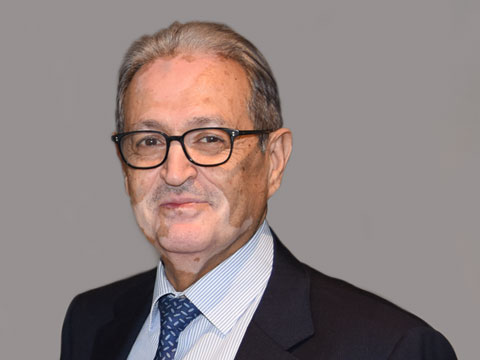
The President of EDAMA Association for Energy, Water, and Environment, Dr. Duraid Mahasneh, stated that Jordanian water security faces growing challenges in light of the Kingdom’s reliance on shared regional water sources, pointing out that water differs from energy in terms of import feasibility, as water shortages cannot be easily compensated for through imports from abroad.
Commenting on the affirmation of His Majesty King Abdullah II ibn Al Hussein in the noble Speech from the Throne, with which he opened the third ordinary session of the twentieth National Assembly today, Monday, that “water security constitutes a national priority regarding which there is no room for compromise or appeasement, and that Jordan will not allow the thirst of Jordanians to be hostage to any circumstance,” Mahasneh explained in an interview with “Al-Taj News” that most Jordanian water resources are of a regional nature, as the Kingdom shares the waters of the Jordan River with Syria, Palestine, and Israel, in addition to the waters of the Yarmouk River with the Syrian side, pointing out that Jordan’s share of the Yarmouk Basin waters exceeds 300 million cubic meters, constituting about a third of the Kingdom’s water needs or thereabouts.
He pointed out that this water share has not reached Jordan for years, even though the 1987 agreement determined the number of dams Syria had the right to construct at 27 dams, whereas the actual number of dams currently exceeds 46 dams, which has negatively impacted Jordan’s water share.
Mahasneh added that Jordan had hoped for an improvement in the reality of water cooperation following the political change in Syria, but water flow has not witnessed improvement, stressing that concerns have heightened with Israel reaching a number of Syrian dams, alongside its moves to control water tributaries in Lebanon.
In the same context, he pointed out that the peace treaty, which stipulates supplying Jordan with water from Israel, has not had its clauses related to obtaining or purchasing water implemented as required, considering that the water file has become one of the aspects of pressure on Jordan amid regional conflicts and tensions.
Mahasneh emphasized that the National Conveyor Project, despite its strategic importance, is not sufficient on its own to confront water challenges, given the increasing water deficit year after year, and the additional pressures resulting from the Kingdom hosting around one million Syrian refugees who need water and share limited resources with Jordanians.
He stressed that Jordan received refugees based on Arabism and humanitarian considerations, but that should not come at the expense of the Kingdom’s water rights, emphasizing the necessity of ensuring Jordan obtains its water share from various sources and protects its rights in accordance with signed agreements.
His Majesty King Abdullah II had confirmed that water security constitutes a national priority regarding which there is no room for compromise or appeasement, stressing that Jordan will not allow the thirst of Jordanians to be hostage to any circumstance.
His Majesty directed the government, during the noble Speech from the Throne opening the third ordinary session of the twentieth National Assembly today, Monday, to continue implementing water security projects and to develop proactive plans to protect water resources and ensure their sustainability, safeguarding the rights of future generations.